
Your Cart is Empty
WELCOME TO DARLING and COMPANY


Last Updated: October 19, 2026
Durability starts with the hide, not the logo. At Darling and Company, we build every handcrafted leather bag around a simple idea: the material and the making matter more than the marketing. A bag lasts because of what it is made from and how it is put together.
Two things decide that: the leather grade and the construction. Get both right and you have a bag for years. Get either wrong and even a beautiful bag will wear out early.
Leather grades describe which layer of the hide a bag uses. That single choice drives most of its durability.
Hide quality matters just as much. A well-tanned hide keeps its natural grain and holds up to bending. Poor tanning leaves leather dry and prone to cracking. The label "genuine leather" tells you almost nothing about how long a bag will last.
Stitching and seams fail before good leather does. A bag is only as strong as the points where it is joined.
Look for tight, even stitching with no loose threads. Reinforced seams at the handles and straps carry the most weight, so they need extra rows or rivets. Bag construction also includes reinforced bottoms and sturdy feet, which keep the base from wearing through.
Our Camden Bag shows what this looks like in practice: antiqued gold rivet trim, a zippered closure on both sides, and a structured shape that holds under daily carry. Small details like these are what separate a bag that lasts from one that sags after a season.

A well-made full-grain leather bag can last anywhere from five years to several decades. The range is wide because lifespan depends on three things: leather quality, construction, and how hard you use it.
Most guides promise "decades" without context. That number only holds for full-grain leather that is cared for and rotated. A top-grain bag used every day with no maintenance will not reach it.
Here is how longevity tends to break down by how often you carry the bag:
| Use Level | Carry Frequency | Realistic Lifespan | What Shortens It |
|---|---|---|---|
| Light | A few times a month | 15+ years | Poor storage |
| Moderate | Several days a week | 8-12 years | Missed conditioning |
| Heavy | Every day, all day | 4-8 years | Strap and seam strain |
| Abusive | Daily, overloaded | 2-4 years | Stretching, water damage |
The pattern is clear: the more you carry a bag and the more you load it, the faster it ages. Rotating between bags and keeping weight reasonable are the easiest ways to stretch the years.
Handcrafted leather bags usually outlast mass-produced ones, and the reason is not romance. It comes down to materials and how much attention each bag gets.
Mass-produced bags often use split leather or synthetic leather (pleather) to cut costs. These materials can peel, crack, and fray at the edges. Synthetic leather also cannot be conditioned or repaired the way real leather can.
Handcrafted bags tend to use full-grain or quality top-grain hides. A maker working on one bag at a time can check each seam and reinforce the stress points. That craftsmanship shows up in resistance to wear and tear.
There is one honest caveat. Handcrafted does not automatically mean durable. A poorly made handmade bag can fail faster than a good factory one. The word "handcrafted" is a signal, not a guarantee. You still have to check the leather grade and the stitching.
You can judge a bag's durability in minutes with your hands and eyes. These checks work whether you are shopping in person or reading product photos closely.
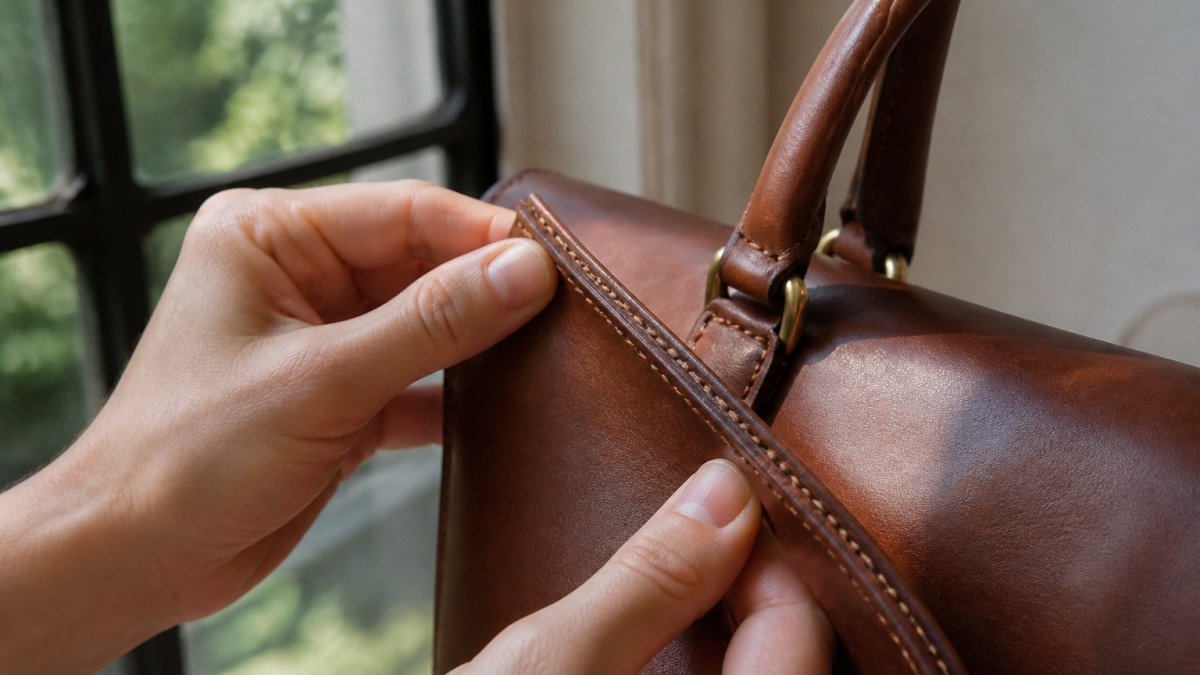
These six checks catch most weak points before you spend a dollar. If a bag passes all of them, you are looking at something built to last.
Proper care is the difference between a bag that ages well and one that cracks early. Leather is skin. It dries out, soaks up water, and fades in harsh sun if you ignore it.
The basics of how to care for a leather bag are simple:
A common mistake is over-cleaning. Too much product strips the leather and leaves it dull. Less is more.
Where you live changes how a bag ages. Humidity can invite mildew, so bags need airflow in damp climates. Dry air pulls moisture from leather and speeds cracking, which makes conditioning more important in winter.
Sun exposure fades color and dries the surface. A bag left on a car seat all summer will show it. Rotate your bag out of direct light and store it away from windows.
Leather bag maintenance tips come down to small habits repeated over years, but the habits only pay off if the bag is built to be repaired. The real long-term ownership question is not just how to care for a bag, it is whether the bag can be fixed when care is not enough, and what that costs per year.
Repairability is where handcrafted leather separates itself from synthetic and mass-produced alternatives. A good cobbler can restitch a seam, replace a strap, re-set rivets, refresh a worn edge, or replace a zipper pull. Synthetic leather usually cannot be repaired at all, once it peels or cracks, the bag is done. That difference changes the ownership math.
Most practitioners find the common repairs fall into a few categories: seam restitching, strap and handle replacement, hardware re-setting, edge refinishing, and lining repair. A bag designed with replaceable hardware and accessible seams is far cheaper to keep in service than one where a failed rivet means a failed bag.
The useful way to judge value is cost per year of use, not the sticker price. A bag that costs more up front but lasts twice as long and can be repaired can cost less per year than a cheaper bag replaced every few seasons. Qualified estimates help: a bag carried daily for eight years with one modest repair spreads its cost across far more days than a bag replaced every two years.
Warranties and maker policies matter here. A brand that stands behind its construction and offers repair services is effectively sharing the long-term risk with you. Ask before you buy: what does the warranty cover, can the hardware be replaced, and will the maker repair a seam years down the line? A clear answer is worth more than any marketing claim.
Judge a leather bag by cost per year of use, not purchase price. Repairability, replaceable hardware, and a clear warranty are what turn a durable bag into a good long-term investment.
A handcrafted leather bag is worth it when the leather grade and construction are right. Full-grain hides, reinforced seams, and finished edges are what turn a bag into a long-term piece rather than a seasonal buy.
That is the standard we hold at Darling and Company. Every bag is designed and handcrafted in the USA, and each one is unique, with slight variations that come from real hands doing real work. Customers tell us the same things again and again: high quality, a work of art, attention to detail.
Our Rowan Black Croc Bag pairs crocodile-embossed genuine leather with a bamboo handle and crossbody chain, built for daily carry and evenings out. The Lauren Bag in Black brings smooth leather, a gold emblem, and purse feet that protect the base. The Atlas Tote in Navy/Spa Blue adds a reinforced bottom and sturdy feet for heavier loads.

Not automatically. Handcrafted refers to how a bag is made, not the leather grade. A handcrafted leather bag can use full-grain, top-grain, or genuine leather, and the hide quality decides much of the durability. Ask the maker which grade and tannery they use. Full-grain leather keeps the natural grain and resists wear best, while genuine leather is a lower grade that can fray or crack sooner under heavy use.
A well-made handcrafted leather bag in full-grain leather can last 10 to 20 years with regular use and proper care, and longer with light use. Lower grades like genuine leather often show wear within 3 to 5 years of daily carry. Lifespan depends on hide quality, construction, and how you maintain it. Reinforced seams, quality stitching, and routine conditioning add years to how long do leather bags last.
Check the stitching first: tight, even stitches with no loose threads signal care. Look at reinforced seams at the straps and base, since these bear the most stress. The leather should feel supple and show a natural grain rather than a uniform plastic finish. Edges should be neatly finished, and hardware should feel solid. These construction details separate a bag that lasts decades from one that frays in a year.
Store it stuffed with tissue in a dust bag away from direct sun, and wipe it with a soft dry cloth after heavy use. Condition every 3 to 6 months with a leather conditioner to keep the fibers supple and prevent cracking. Keep it dry, since repeated moisture weakens the leather. These leather bag maintenance tips protect the hide and help a handcrafted leather bag hold its shape and patina for years.
Durability is not luck. It is the right leather, honest construction, and a little care along the way. If you want a bag built to last and made to start conversations, Darling and Company handcrafts every piece in the USA with that standard in mind. Explore our signature designs, from structured totes to artful crossbodies, and choose a bag you will still be carrying a decade from now. Shop Bags and find the piece that tells your story.


