
Your Cart is Empty
WELCOME TO DARLING and COMPANY


Last Updated: November 5, 2026
Quick Summary
Wearable art is clothing or accessories made with deliberate artistic intent, where concept and narrative come before pure function. To wear it well, let one art-forward piece lead and keep everything else quiet, pairing a bold bag with tailored trousers, a plain knit or a blazer. Choose a first piece by picking artwork you will still love in five years, then confirm the materials, construction and measurements match the price.
312% between 2022 and 2026, according to Moe Beer's Wearable Art & Streetwear Trends 2026, and that spike explains why the category has moved from gallery walls into daily wardrobes. At Darling and Company, we build every bag as a small piece of wearable art, so we watch this shift closely. Wearable art is clothing or accessories made with deliberate artistic intent, where concept and narrative come before pure function. Below, we break down what defines the movement, how to style it without looking costumed, and how to choose a first piece you will actually wear.
Wearable art begins with an idea; fashion begins with the wearer. The World of WearableArt's definition draws that line sharply: wearable art prioritizes narrative, sculpture and expression, while conventional fashion starts with function. This matters when you shop. A hand-painted jacket with a story behind its imagery is wearable art; a mass-produced print tee is fashion with decoration. The distinction keeps you from overpaying for "artistic" marketing and helps you recognize genuine craftsmanship when you see it.
The clearest wearable art examples sit at the intersection of fine art and clothing. Abstract art-print hoodies and artist collaborations now anchor streetwear collections, per Moe Beer's 2026 trend report, while hand-painted illustrations, unique dyes, sculptural shapes and limited-edition prints define the studio side of the category. Our Van Gogh Almond Blossom Bag is a useful reference point: a reproduction of the painting on the front, teal tweed on the back, riveted suede trim and a burnt bamboo handle, hand-finished to order at $625. That is what artistic intent looks like in accessory form.

The rule for styling statement accessories is simple: let one piece lead and keep everything else quiet. A bold bag against a neutral base reads as confidence; the same bag against three other loud pieces reads as a costume. Start with tailored trousers, a plain knit or blazer, and one art-forward accessory. If you want concrete outfit formulas, our guide on how to style statement bags walks through seven combinations that work. Professionals who need pieces that transition from meetings to evenings can also browse unique fashion accessories for workwear.
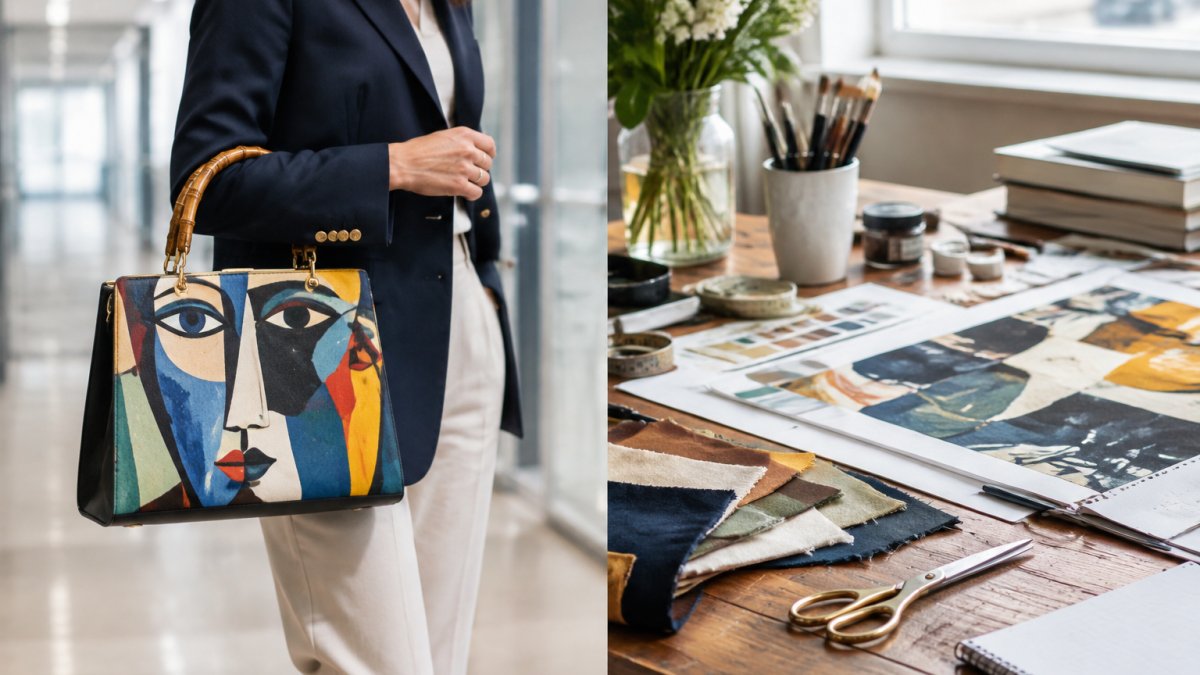
A bold bag works in a professional wardrobe when its shape stays classic and its surface carries the drama. Structured clutches and top-handle silhouettes read as polished; it is the artwork, not an unusual shape, that starts conversations. Our Swan Lake Bag follows that logic at $625: swan art on canvas at the front, pink ostrich fabric at the back, a skinny scarf and a bamboo handle, sized at 9.75 by 6 by 2.5 inches. If you want more options built for a working wardrobe, see our edit of sophisticated bags for professional women.

What separates wearable art designers from conventional labels is process, not just product. That is why you see textile manipulation, sculptural silhouettes, hand-painting, and avant-garde forms rather than seasonal colorways. Researcher analysis indexed by PubMed Central confirms that fashion design scholarship increasingly treats these experimental fronts as its own field of study. The practical result for buyers: fewer pieces, made in smaller runs, with visible handwork and intentional detail.
When you evaluate a designer, it helps to ask who made the surface artwork, how many pieces exist in a run, and what happens if the finish is damaged.
Darling and Company handcrafts statement bags in the USA with a cultivated blend of current trends and enduring archetypes. Our Chinoiserie Icons Bag shows the approach at $395: blue-and-white Lilly Pulitzer striped fabric on the front, an oversized chinoiserie-fabric bow on the back with a gold jaguar at the center, a burnt bamboo handle, and an upcycled cigar box as packaging. Each bag may have slight variations from what is pictured.
Painted surfaces, sculptural forms, and embellished trims each have different failure modes, and the care routine that protects one can damage another. This is the ownership angle most trend coverage skips, and it is where the real cost of a piece lives.
Match the care method to the material. A hand-painted canvas front is vulnerable to abrasion and solvent; a dyed silk panel is vulnerable to light and moisture; a sculptural resin or 3D-printed element is vulnerable to heat and impact. For leather trim and handles, our step-by-step leather care guide covers conditioning and cleaning in detail.
Storage that actually protects the artwork. Store structured bags in their box or a breathable dust bag, keep them out of direct sun, and avoid sealed plastic, which traps moisture. Stuff the interior to hold shape, but use acid-free tissue rather than newsprint. Rotate pieces rather than leaving one on a shelf for months; long-term contact with a rough surface can abrade a print or flatten a sculptural element.
Repair before replacement. Keep the original box, any artist card, and the receipt, attribution and provenance matter if you ever resell or insure the piece.
Durability and environmental trade-offs.
A simple care calendar. Wipe fabric surfaces with a dry cloth after wear, polish hardware monthly, condition leather trim two to four times a year depending on climate, and inspect clasps, hinges, and purse feet each season. Store away from radiators and humid bathrooms. If a piece has a sculptural element, check it for hairline cracks before and after travel.
Watch out: solvent-based cleaners and household leather wipes can lift paint or dye from a hand-finished surface. Test any product on an inconspicuous area first, or send the piece to a textile conservator.
Choose a first piece the way you would choose art for a room: pick a subject you will still love in five years, then confirm the construction matches the price. Check the materials, the hardware, the interior finish and the measurements against how you actually carry a bag. Our Darling Thoroughbred Bag illustrates the checklist at $625: a reproduction of an original antique painting, brown checkerboard fabric with a horse bauble, riveted suede trim, acid-protected hardware, a velvety liner, a pocket, a small mirror and a sable-stained mahogany box.

| Decision Point | What to Check | Why It Matters |
|---|---|---|
| Subject matter | Artwork you will still love in five years | Prevents a one-season purchase |
| Materials | Fabric, trim, hardware, interior liner | Signals real craftsmanship |
| Construction | Clasp, hinges, purse feet, handle | Determines daily durability |
| Size | Measurements against your daily carry | Keeps the piece wearable |
| Care | Storage box, cleaning method | Protects the artwork long term |
Wearable art begins with a concept and prioritizes narrative, sculpture, and expression, while conventional fashion typically starts with function and the wearer, according to the World of WearableArt. That means a wearable art piece is often one-of-a-kind or limited-edition, made with techniques like hand-painting, unique dyes, or sculptural shapes. Fashion can still be artistic, but wearable art puts artistic intent first and wearability second.
Accessible wearable art examples include hand-painted garments, art-print hoodies, limited-edition printed scarves, and statement handbags featuring reproductions of fine art or original illustrations. Darling and Company's Van Gogh Almond Blossom Bag, priced at $625, pairs a Van Gogh painting with teal tweed and a bamboo handle,
Anchor the statement piece with neutral, tailored basics so the art leads the outfit. Pair a bold art-print bag with a solid blazer, plain trousers, and minimal jewelry. Keep the rest of your look understated, choose one statement accessory per outfit, and let the craftsmanship speak. This approach keeps wearable art feeling sophisticated rather than costumed, whether you are in client meetings or at a gallery opening.
Many wearable art pieces are made to be worn, not shelved.
The real challenge is not finding artistic fashion; it is finding a piece that earns its place in your rotation. Darling and Company handcrafts statement bags in the USA, each one functionally artistic, made to order with slight variations that make it yours alone, and finished with details like riveted suede trim, bamboo handles and velvety liners. Get started with Darling and Company and carry a conversation starter that is anything but basic.


