
Your Cart is Empty
WELCOME TO DARLING and COMPANY


Last Updated: October 25, 2026
Quick Summary
Luxury handbag resale value depends on eight factors buyers check before paying: brand reputation, condition, rarity, market demand, iconic style, original retail price, current resale price, and age. Condition is the single biggest discount driver, so value your bag from recent sold listings rather than asking prices or what you paid.
Luxury handbag resale value factors come down to a handful of things buyers check before they pay: brand, condition, rarity, demand, and timing.
A bag's worth isn't a feeling. It's a set of checkable facts.
The first thing most sellers get wrong: they price from what they paid. Buyers don't care what you paid. They care what the same bag sold for last week.
Valuing a designer handbag is a repeatable process, not a guess. The goal is to arrive at a defensible number a buyer will actually pay, not the number you hope for. Follow these steps and you'll get close to a realistic sale price.
Asking prices are fiction. Anyone can list a bag for any amount. Sold prices are the only honest data point, but even those need care. A common mistake is trusting the first "sold" listing you find. Look for a cluster of recent sales in the same condition. If those numbers agree, you have a market. If they scatter, the bag is hard to price and you should sell where buyers bid, an auction or a platform with active bidding, rather than setting a fixed price and waiting.
Suppose five recent sold comps for the same model, size, and material land at $1,200, $1,450, $1,500, $1,550, and $1,900. Discard the $1,200 and $1,900 outliers; the middle three average to $1,500. If your bag has light corner rub and no dust bag, adjust down, a common pattern is to subtract for missing packaging and visible wear. If your bag is pristine with full set, adjust up. The point is not a magic percentage; it's that every adjustment should be tied to a specific, photographable difference between your bag and the comps.
The first thing most sellers get wrong: they price from what they paid. Buyers don't care what you paid. They care what the same bag sold for last week. Original retail price is a starting reference, not a floor. A bag that retailed at $2,400 can trade well below that once a newer version or a different size captures demand, and a discontinued model can trade above retail if buyers can't get it new.
Designer bag resale value by brand varies widely, and the gap isn't about quality. It's about demand and scarcity. Heritage houses with waiting lists tend to hold value because buyers can't get new ones easily.
The honest take: brand prestige sets the ceiling, but condition and demand decide where you actually land. A pristine bag from a strong house beats a worn one from a stronger house almost every time.
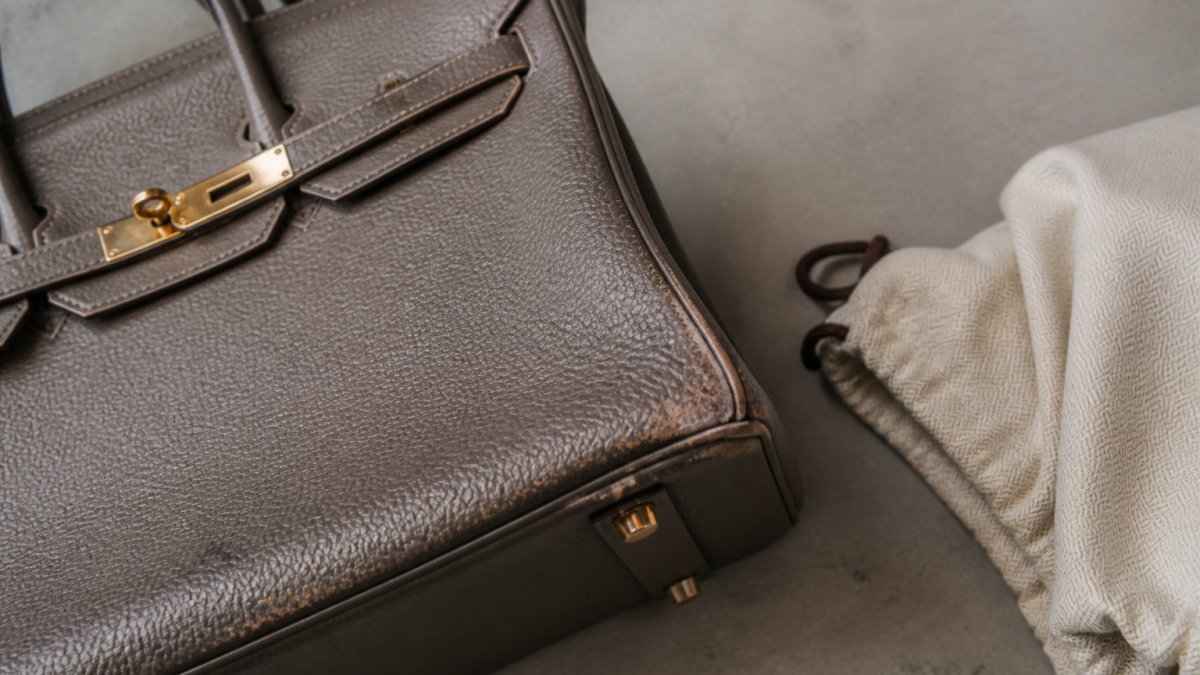
Handbag resale value by condition follows a rough grading scale that buyers and resellers use to set expectations. Condition is where most of the money is won or lost, and it's also where listings most often overpromise.
| Grade | What It Looks Like | Effect on Value |
|---|---|---|
| New with tags | Unused, original tags attached, packaging intact | Highest |
| New without tags | Unused but tags removed; may show handling | Near highest |
| Excellent | Used lightly; no visible wear on corners, handles, or hardware | Strong |
| Very good | Minor corner rub, faint surface scratches, light hardware dulling | Moderate |
| Good | Visible wear: corner scuffs, handle darkening, interior marks, some hardware scratches | Reduced |
| Fair | Staining, structural softness, heavy corner wear, odors, or prior repairs | Lowest |
Grades are shorthand; buyers actually price the specific flaw. A few patterns show up again and again:
Grade in daylight, not indoor light. Photograph the four corners, both handles, the hardware, the interior, and the base. Compare those photos against the definitions above rather than against your memory of how the bag looked new. If you're between two grades, grade down, buyers will find the flaw anyway, and a pleasant surprise sells better than a disappointment.
For a deeper look at preserving leather between wears, see our guide on how to care for leather.
Luxury handbag authentication confirms a bag is genuine, and provenance is its documented history. Both protect your price. Buyers pay more for bags with receipts, authenticity cards, and a clear ownership trail.
Keep everything that came with the bag: dust bag, box, tags, and paperwork. Photograph the interior label, hardware engravings, and stitching before you list. If you're buying, request those photos up front.
Selling fees decide what you actually keep, and timing decides whether you keep it at all. Consignment shops take a cut. Resale platforms charge a percentage plus payment processing.
Run the math before you list. Take your expected sold price, subtract the platform fee and shipping, and compare channels side by side. Sell when demand is strong for that model, not when you're impatient.
Handcrafted statement bags sit in a different lane than mass-produced luxury. If you're weighing value factors, it helps to understand what makes a bag timeless before you decide what belongs in your collection.
Darling and Company makes functionally artistic statement bags, each handcrafted in the USA. Every piece is unique, with slight variations that make it yours. These aren't built for the resale market.
Value isn't only about what a bag fetches later. It's about what it does for you now. A bag that starts conversations and works for client meetings and nights out earns its place.
The Rowan Black Croc Bag pairs black crocodile embossed genuine leather and black patent leather with a black bamboo handle and a crossbody chain. The Millie Bag in Marine brings deep turquoise/marine crocodile embossed patent leather, two bamboo handles, and a detachable crossbody or shoulder strap for a bolder look.


Buyers ask us whether handcrafted bags hold up to daily wear. They do, when you care for the leather and store them properly. And they ask if they can resell one later.
Brand reputation and current buyer demand carry the most weight, followed by condition, rarity, and whether the model is still in production. A bag from a house with steady demand can keep a large share of its original retail price, while a discontinued model in excellent condition may sell above retail. Accessories like the dust bag, box, and receipt add a smaller but real bump, and authentication paperwork matters for higher-value pieces. Style, color, and material round out the list.
Condition grades run roughly from new-with-tags down to fair. A bag in new or like-new condition typically commands the strongest percentage of retail, while visible corner wear, handle darkening, or hardware scratches push it down a tier. Structural issues like a sagging shape or torn lining drop it further. Buyers price repairs into their offer, so a bag needing restitching or replacement hardware sells at a discount that often exceeds the repair cost itself.
Yes, but modestly. Full sets (dust bag, box, receipt, and authenticity cards) sell faster and can add a small premium over a bag sold alone, especially for high-value pieces where provenance matters. The receipt helps with luxury handbag authentication because it ties the bag to a purchase date and retailer. Missing packaging rarely kills a sale, but it gives buyers room to negotiate and can slow down how quickly the bag moves.
Start by finding sold listings, not asking prices, for the same brand, model, size, color, and material on resale platforms. Average the last several sold prices, then adjust for your bag's condition grade and whether you have the full set of accessories. Subtract the selling platform's commission to see your net proceeds. Compare that net figure across at least two channels, since consignment, direct sale, and buyout offers can differ by a meaningful margin.
The real challenge isn't learning the factors. It's finding a bag worth keeping once you understand them. Darling and Company designs statement bags that are handcrafted in the USA, functionally artistic, and unique from piece to piece, with a blend of current trends and enduring archetypes. Get started with Darling and Company and carry something that starts conversations wherever you go.


