
Your Cart is Empty
WELCOME TO DARLING and COMPANY


Last Updated: November 8, 2026
Quick Summary
To clean leather crossbody bags safely, never soak them: wipe the surface with a soft cloth, use a drop of pH-neutral soap in distilled water, and wring the cloth nearly dry before cleaning in small circles. Patch test a hidden area first, blot stains instead of rubbing, then air-dry away from heat and apply a thin layer of leather conditioner.
Learning how to clean leather crossbody bags safely starts with one rule: never soak them. Leather is skin. Immersion swells the fibers, strips the oils that keep it supple, and leaves water stains that never fully lift.
The good news: most marks come off with a soft cloth, a little mild soap, and patience. Below, we walk through a gentle cleaning routine, plus stain tactics and the products to avoid.
Soaking leather breaks down the structure that gives it shape. Tanned hides hold natural oils and fats in their fibers. A quick wipe does no harm. A soak pulls those oils out, and the leather dries stiff, cracked, or discolored.
So skip the sink, the washing machine, and the bathtub. A damp cloth is your tool, not a bucket.
A safe home clean takes about 20 minutes and needs no special kit. Work in small sections, keep moisture minimal, and let each step dry before the next. Here is a gentle routine:
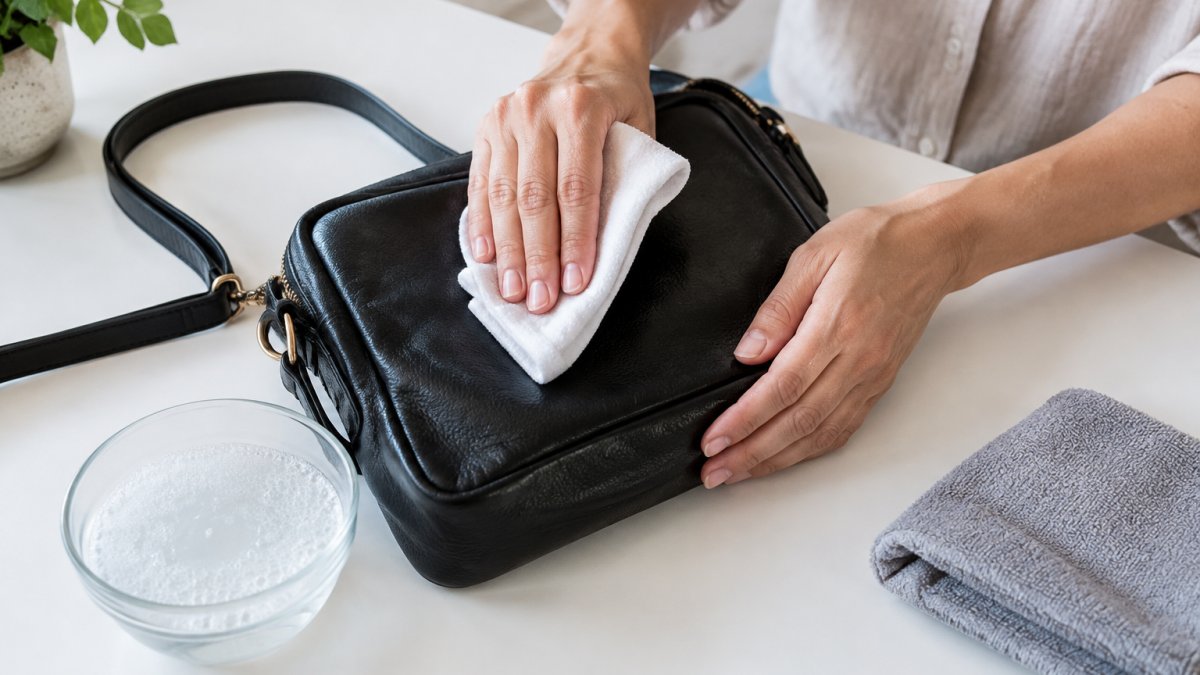
A patch test protects the finish you cannot replace. Apply a tiny amount of cleaner to a spot no one sees, like the underside of a strap or the inside of a flap. Wait 10 minutes, then check for color change, dulling, or tackiness. If the leather looks the same, proceed. If it darkens or feels sticky, stop and try a gentler product.
The key to stain removal is speed and restraint. Blot, never rub. Rubbing pushes the stain deeper and can spread dye across the surface.
For a fresh spill, blot immediately with a dry cloth. For a set stain, use a barely damp cloth with a touch of mild soap, then blot dry. Always let one attempt dry before trying again.
Different stains need different handling. Match the method to the mark:
| Stain | First Move | Avoid |
|---|---|---|
| Oil or grease | Blot, then dust with cornstarch for a few hours | Rubbing, heat |
| Ink | Dab with a dry cloth, do not spread | Soapy water, scrubbing |
| Water ring | Dampen the whole panel evenly, air-dry | Spot-wetting one area |
| Color transfer | Gentle wipe with mild soap | Harsh solvents, bleach |
Ink and dye transfer are the hardest to fix at home. If a mark will not lift after two gentle tries, stop and consider a professional.
A secondhand find deserves a full clean before it touches your wardrobe, but the first step is not cleaning. It is identifying the finish, because the wrong method on an unknown material can ruin a bag in one pass.
If you cannot tell the finish, test a hidden spot with a barely damp white cloth. If the cloth picks up color or the leather darkens and stays dark, stop and treat it as delicate.
Watch out: vintage linings can be fragile, so use a dry cloth inside rather than a damp one. If the bag smells musty, air it out for a few days before cleaning, and check seams and strap attachments for loose stitching before you put weight in the bag.
The strap, lining, and hardware take more daily contact than the body panels, so they deserve their own routine. A crossbody strap rubs against clothing and skin all day, the lining collects crumbs and pen marks, and the hardware absorbs skin oils and hand lotion. Treat each component on its own terms.
Watch out: conditioner applied too heavily to a strap can transfer onto clothing for days. Apply thin, buff thoroughly, and let the strap sit overnight before wearing the bag.
Turn the lining out and brush away crumbs with a dry cloth or soft brush. For fabric lining, spot-clean with a barely damp cloth and mild soap, then blot dry and let it air fully before closing the bag. For suede or microfiber lining, use a dry suede brush only; water leaves rings that are hard to lift. Pen marks on lining are common; dab with a dry cloth first and avoid scrubbing, which spreads ink into the fabric weave.
Wipe zippers, rings, and rivets with a dry microfiber cloth to remove skin oils. Keep zippers free of grit with a dry brush, and avoid lubricants that attract dust. For tarnished brass or antiqued finishes, a dry cloth is usually enough; abrasive polishes can remove the intentional patina.
If a strap is worn beyond cleaning, a fresh crossbody strap gives the bag new life.
Some products do more damage than the stain. Keep these away from your bag:
Stop cleaning and call a professional if the leather cracks, the finish peels, or a stain will not lift after two gentle attempts. Suede, exotic skins, and heavily embellished bags are best left to a specialist. Follow any care instructions that came with your bag.
Drying is where many bags get ruined. Never use heat. Stuff the bag lightly with clean tissue or cloth to hold its shape, then let it air-dry at room temperature, away from sun and vents.
Once dry, condition smooth leather with a thin, even layer of neutral cream. For a deeper walkthrough of this stage, see our guide on how to care for leather.
A bag worth cleaning is a bag worth keeping, and durability starts with how it is made. Look for genuine leather, secure stitching, and quality hardware. These details decide whether a bag holds up to daily wear or falls apart after a season.
Our Camden Bag is built for exactly this kind of care: smooth leather, an adjustable leather crossbody strap, antiqued gold rivets, and a zippered closure on both sides. If you want to understand what makes a handcrafted bag last, read our guide on how durable handcrafted leather bags are, or browse the full collection of leather bags to find one worth the routine.

Caring for a leather crossbody bag takes minutes, not hours, and the payoff is a piece that ages beautifully instead of wearing out.
Skip it. Dish soap is formulated to strip grease, and it will pull the natural oils out of leather, leaving the surface dry and prone to cracking. Use a mild soap diluted in distilled water or a pH-neutral leather cleaner instead. Whatever you choose, test it on a hidden area such as the inside of the strap or the bottom panel, wait 24 hours, and check for darkening or dulling before you clean leather crossbody straps or the body of the bag.
Keep vinegar, bleach, rubbing alcohol, acetone, and household disinfecting wipes away from finished leather. These strip the topcoat and lift dye, and the damage usually shows up as a dull patch or a lighter ring that cannot be reversed. Never submerge a leather crossbody bag in water or put it in a washing machine, and do not tumble dry it. If a stain needs something stronger than mild soap, hand it to a professional leather cleaner rather than experimenting.
Blot, do not rub. For oil, press cornstarch onto the spot and leave it several hours to draw out the grease, then brush it away. For ink, dab with a cotton swab dipped in a small amount of leather-safe cleaner, working from the outside of the stain inward. For water marks, dampen the whole panel evenly with distilled water and let it air-dry away from heat so the ring does not set. Address spills the same day whenever possible.
A very mild soap diluted in distilled water covers most routine cleaning. Wipe with a soft cloth, rinse the cloth, wring it out until barely damp, and go over the surface again to lift soap residue. Let the bag air-dry at room temperature, away from radiators and direct sun. Finish with a thin layer of leather conditioner every three to six months depending on how often you carry it, which keeps smooth leather supple and slows cracking along the strap.


